
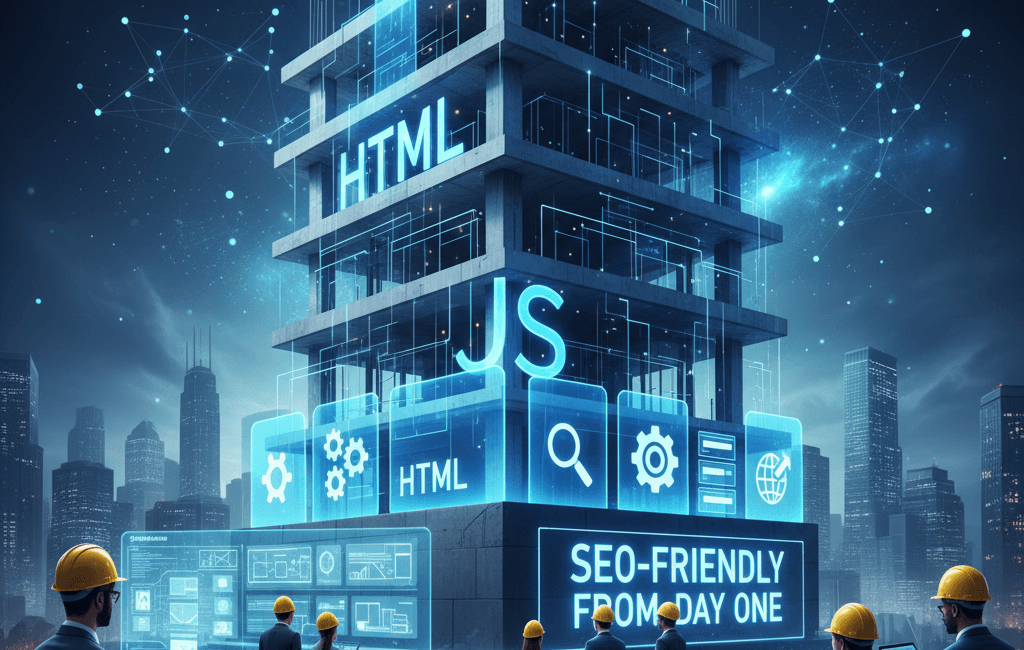
In today’s digital landscape, a beautiful website isn’t enough—it must be visible, fast, and optimized to attract the right audience. That’s where SEO (Search Engine Optimization) comes in. A well-designed website built with SEO principles from the start doesn’t just look good—it performs, ranks higher on Google, and consistently drives organic traffic.
At our core, we believe SEO shouldn’t be an afterthought—it should be part of the foundation. From planning and design to content and technical setup, we build SEO-friendly websites from day one to help your business grow online.
Here’s how we do it, step by step.
1. Keyword Research Before Design Begins
Every SEO-friendly website starts with strategic keyword research. Before a single page is designed, we identify the exact words and phrases your target audience uses to find your products or services.
We analyze:
- Search intent (what users really want to find)
- Competitor keywords to see where opportunities exist
- Long-tail keywords that bring qualified traffic
By aligning your website’s structure and content with real search data, we ensure that your site is built to attract visitors from the very beginning—not months later.
The right keywords guide design, content, and structure from the start.
2. SEO-Optimized Site Architecture
A strong site structure makes it easy for both users and search engines to navigate. We organize your website’s pages logically so Google can easily crawl, understand, and index your content.
Our structure approach includes:
- Creating a clear hierarchy of pages (Home → Services → Subpages).
- Using SEO-friendly URLs like “/services/web-design” instead of “/page?id=123.”
- Building internal linking between related pages to keep visitors engaged and distribute ranking power.
A clean, organized site architecture helps Google find everything efficiently—and keeps your visitors from getting lost.
If Google can’t find it, it can’t rank it.
3. Mobile-First Design and Performance Optimization
In 2025, mobile-first isn’t optional—it’s essential. More than 70% of users browse on smartphones, and Google ranks mobile-friendly websites higher in search results.
From day one, we design with mobile performance in mind:
- Responsive layouts that adapt to every screen size
- Lightweight images and optimized scripts
- Prioritizing Core Web Vitals like loading speed and interactivity
We test every design on multiple devices to ensure smooth performance. The result? A website that’s not only user-friendly but also earns SEO points for speed and usability.
Fast, mobile-optimized sites rank better and convert faster.
4. Clean, SEO-Friendly Code
Behind every great website is clean, efficient code. We build with best practices that ensure search engines can easily crawl your pages without confusion or errors.
That means:
- Proper use of HTML tags (H1, H2, H3) for content hierarchy
- Optimized meta titles and descriptions for every page
- Structured schema markup to help Google understand your content
- Avoiding duplicate content and unnecessary scripts
Our development team ensures that every line of code supports SEO performance.
A fast, well-coded website is a search engine’s best friend.
5. Content Strategy That Drives Traffic
Content is the heart of SEO. From launch day, we integrate targeted, high-quality content that speaks to both search engines and humans.
We create:
- Clear, keyword-rich headlines that answer user intent
- Engaging, valuable copy that encourages longer time on site
- Blogs and articles designed to attract backlinks and shares
Each page has a purpose—whether to inform, convert, or rank. By balancing readability with optimization, your content works hard behind the scenes to boost your visibility.
Great design draws people in; great content keeps them there.
6. On-Page SEO Implementation
Before your website goes live, we handle all the essential on-page SEO elements that set the stage for ranking success.
This includes:
- Optimized meta titles and descriptions
- Proper header tag hierarchy (H1, H2, H3)
- Image alt tags with descriptive keywords
- Internal and external linking strategies
- SEO-friendly URLs and canonical tags
We make sure that each page communicates clearly with search engines and is fully optimized for organic visibility.
On-page SEO ensures your content gets the attention it deserves.
7. Speed and Technical SEO Optimization
Website speed is one of Google’s top ranking factors—and one of the biggest influences on user experience. A slow website loses visitors (and conversions) in seconds.
We use performance tools like Google PageSpeed Insights and GTmetrix to ensure:
- Fast loading times under three seconds
- Optimized images and scripts
- Reliable hosting and CDN (Content Delivery Network)
- Proper caching and compression settings
We also implement technical SEO elements like XML sitemaps and robots.txt files to help search engines crawl and index your site efficiently.
Speed isn’t just technical—it’s profitable.
8. User Experience (UX) Meets SEO
Search engines prioritize websites that offer great user experiences. That’s why our design team builds UX and SEO together—not separately.
We design intuitive navigation, clear calls-to-action (CTAs), and logical page flow to ensure visitors can easily find what they need. The longer users stay and interact with your site, the more signals Google receives that your content is valuable.
A seamless UX keeps visitors engaged—and engagement boosts rankings.
9. Analytics and Tracking from Day One
Once your site is live, tracking performance is critical. We integrate Google Analytics, Search Console, and heatmap tools like Hotjar or Microsoft Clarity to measure everything from traffic to user behavior.
We monitor:
- Keyword rankings and organic growth
- Bounce rate, session duration, and conversion paths
- User flow and engagement metrics
With real-time insights, we can refine your SEO strategy and continuously improve performance.
Data-driven websites outperform guesswork every time.
10. Ongoing SEO Support and Optimization
SEO isn’t a one-time task—it’s an ongoing process. After launch, we continue to monitor, update, and optimize your site for new trends and algorithm changes.
We offer:
- Monthly SEO audits
- Regular content updates
- Backlink strategy and outreach
- Performance reviews and keyword expansion
This ensures that your website doesn’t just launch SEO-friendly—it stays that way for years to come.
The best SEO strategy is continuous improvement.
Conclusion: SEO Is in Our DNA
When we build a website, we don’t treat SEO as a separate service—it’s woven into every step of the process. From design and development to content and performance, every decision we make helps your site rank higher, load faster, and reach the right audience.
A strong SEO foundation means your website is ready to perform the moment it goes live—not months later.
We don’t just design websites. We build growth engines—optimized for search, speed, and success from day one.