
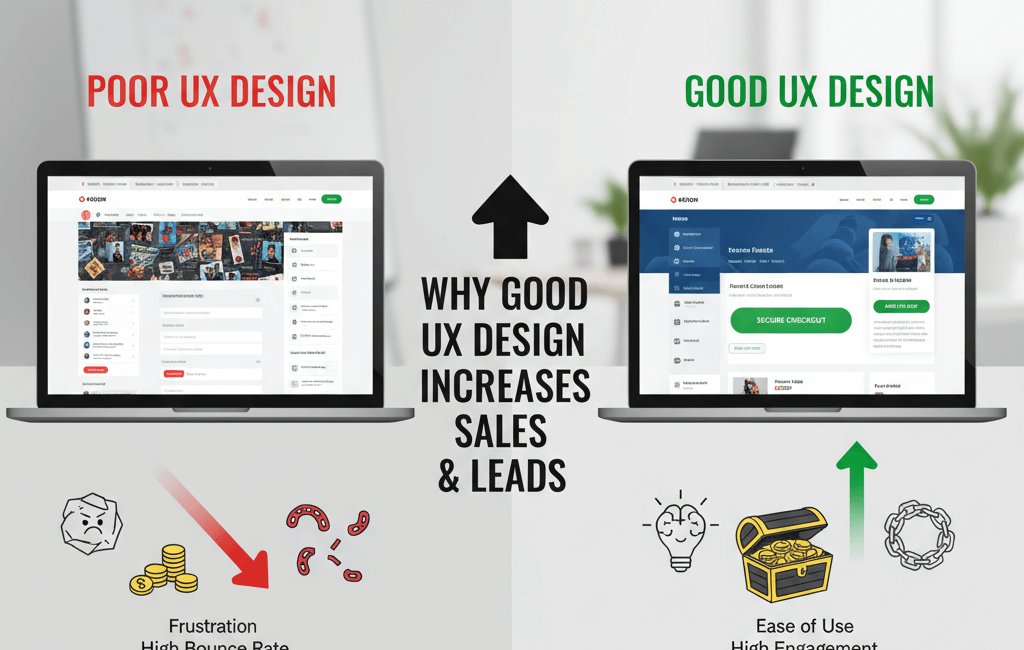
In today’s digital-first world, a business’s success depends heavily on how users experience its website. A beautiful website might grab attention, but a great user experience (UX) keeps visitors engaged, builds trust, and drives them toward action—whether that means making a purchase, booking a service, or subscribing to a newsletter.
In 2025, online users have higher expectations than ever. They want speed, simplicity, and satisfaction. If your website doesn’t deliver, they’ll leave within seconds—and probably never come back. That’s why investing in good UX design is one of the smartest ways to increase sales and leads.
Let’s explore how a seamless, thoughtful UX strategy turns visitors into loyal customers and directly impacts your bottom line.
First Impressions Lead to Lasting Conversions
Visitors form an opinion about your website within seconds. Studies show that 88% of online consumers are less likely to return to a site after a poor experience. That means your UX design doesn’t just affect engagement—it determines whether you gain or lose potential customers.
A well-designed website with intuitive navigation, clear calls-to-action (CTAs), and fast loading speeds immediately creates a positive impression. When visitors can easily find what they’re looking for, they’re more likely to stay longer and explore your offerings.
A smooth first experience builds trust—and trust drives conversions.
Simplicity Sells
A common mistake many businesses make is trying to do too much on one page—too many links, too many colors, too many pop-ups. Overwhelming visitors causes frustration and leads to higher bounce rates.
Good UX design focuses on clarity and simplicity. By streamlining your navigation and reducing distractions, you guide users toward what matters most: the action you want them to take.
For example:
- Clear CTAs like “Buy Now,” “Book a Consultation,” or “Get a Quote.”
- Concise headlines that immediately explain your value.
- Logical page layouts that help visitors move naturally through content.
The easier it is to act, the more likely users are to convert.
Mobile-Friendly Design Means More Conversions
With over 70% of all web traffic coming from mobile devices, mobile-friendly UX is no longer optional—it’s essential. A website that looks great on desktop but breaks on mobile loses a huge portion of potential customers.
Responsive design ensures that every element—text, images, buttons, and forms—automatically adjusts to fit any screen size. Mobile-friendly UX not only improves usability but also boosts sales, as users can easily browse and buy from anywhere.
Search engines also reward mobile-optimized sites with higher rankings, increasing visibility and organic traffic.
A mobile-friendly website equals a lead-generating machine in your customer’s pocket.
Faster Loading Speeds Keep Users Engaged
Speed is a silent killer of sales. Research shows that a one-second delay in page load time can reduce conversions by up to 7%. In e-commerce, that can translate to thousands of dollars in lost revenue.
Good UX design prioritizes performance—compressing images, using efficient code, and optimizing servers to ensure quick loading times.
When your website loads fast, users stay longer, explore more, and are far more likely to complete a purchase or submit a form.
In the digital world, speed builds satisfaction—and satisfaction leads to sales.
Clear Navigation Improves the Buyer’s Journey
The best websites guide users intuitively from point A to point B. Confusing menus, broken links, or cluttered layouts cause frustration and drive potential customers away.
A user-friendly navigation system helps visitors find what they need quickly, whether it’s product information, pricing, or contact details. Good UX design structures content in a logical hierarchy, helping users move naturally through the buying process.
When people can easily discover what they’re looking for, they’re more likely to take the next step.
Good navigation removes barriers between curiosity and conversion.
Emotional Design Builds Trust and Connection
Good UX isn’t just about functionality—it’s about feeling. The colors, images, and tone you use evoke emotions that influence how visitors perceive your brand.
For example:
- Clean, minimal layouts create a sense of professionalism and clarity.
- Warm colors and friendly copy make visitors feel welcome and comfortable.
- Consistent branding builds familiarity and trust.
When users feel emotionally connected to your brand, they’re more likely to purchase, subscribe, or return. Design that feels human sells better than design that just looks good.
Effective UX Reduces Cart Abandonment
If you run an e-commerce website, you know how frustrating it is when customers add products to their cart but don’t complete the purchase. Poor UX design is one of the main reasons for high cart abandonment rates.
Complicated checkout processes, unexpected fees, and confusing form layouts drive users away. A professionally designed checkout experience should be:
- Simple and short (minimal steps).
- Transparent about costs.
- Optimized for mobile.
- Offering multiple payment options.
By improving the checkout UX, businesses can recover up to 35% of lost sales and dramatically increase conversion rates.
Frictionless design turns hesitation into action.
Accessibility Expands Your Audience
A good UX design considers every user, including those with disabilities or different browsing preferences. Accessibility features such as alt text for images, keyboard navigation, and readable color contrast make your site usable for everyone.
Not only is accessibility the right thing to do, but it also expands your potential audience and improves SEO performance. Google rewards websites that are inclusive and easy to navigate.
Inclusive design isn’t just ethical—it’s profitable.
Consistency Builds Trust and Familiarity
When your website design remains consistent—fonts, colors, tone, and structure—users know what to expect. Consistency reduces cognitive load, making it easier for visitors to process information and trust your brand.
This uniform experience builds a sense of reliability, which leads to stronger brand recognition. Over time, visitors begin to associate your design style and message with professionalism and quality.
Consistency is the secret ingredient that makes brands memorable and trustworthy.
Data-Driven UX Improves Long-Term ROI
A professional UX design isn’t static—it evolves. Using analytics tools like heatmaps, user recordings, and conversion data helps identify where users struggle and what encourages them to act.
By continuously testing and improving UX elements, you can:
- Increase conversion rates.
- Lower bounce rates.
- Improve user satisfaction and loyalty.
Every improvement, even small ones like optimizing a CTA button color or simplifying a form, can have a measurable impact on your sales and leads.
Good UX design doesn’t just look great—it pays off continuously.
Conclusion: Better Experience, Bigger Profits
In 2025, customers don’t just buy products—they buy experiences. A website with good UX design turns casual visitors into loyal customers by making their journey effortless, enjoyable, and rewarding.
When your site is easy to navigate, loads fast, and feels trustworthy, people stay longer, engage more, and convert faster. From boosting SEO rankings to improving conversion rates, every aspect of good UX contributes directly to business growth.
Good UX design isn’t just about design—it’s about results. It increases sales, generates leads, and builds relationships that keep customers coming back.